No pills, no powders, no injections. Sonu's Diabetes Secret is a food-first blood-sugar support program built around 9 everyday "healthy blood sugar level" foods, simple 5-minute sauces, and a done-for-you 21-day eating plan — designed to help support healthy blood sugar levels already in the normal range, without a punishing diet or exhausting workouts.
Most blood-sugar advice falls into two camps: take something, or give something up. Medications manage the numbers, strict diets demand you abandon the foods you love, and both can feel like a life sentence. Sonu's Diabetes Secret was built on a different premise — that ordinary foods, eaten the right way, can help support the body's own healthy blood-sugar balance, and that a plan you can actually enjoy is a plan you will actually follow.
The program's story begins with its author, Karen Richardson, a middle-school math teacher and single mother whose own blood-sugar struggles led her to a small Asian country with notably low rates of blood-sugar problems. There she met a traditional medicine practitioner known as Sonu, who shared an approach passed down through generations of his family: a set of everyday foods and simple preparations said to help the body keep blood sugar steady. Richardson turned that approach into a structured, written program so other people could follow it at home — the 21-day plan you see here.
At the heart of the program is an idea its materials call the "blood sugar fire": low-grade, inflammation-like stress in the body that, in the program's framing, keeps blood sugar elevated. Rather than focusing on insulin production or trying to burn off sugar after it is already in the bloodstream, the program targets that "fire" at the source — with food. The centerpiece is 9 "Healthy Blood Sugar Level Foods": ordinary foods with properties the program says help blunt the blood-sugar impact of the meals around them. You add one or two of them to your day, pair them with one of the quick sauces, and keep eating much as you normally do.
Everything arrives digitally: three core guides — the 9 foods, the 5-minute recipes, and the 21-day "Always Full" eating plan — plus seven bonus reports, all in a private members area you can read on your computer, tablet or phone, download, or print. There are no pills, no teas, no drops and no equipment. It is a dietary education program, not a medical treatment: it is positioned for adults who want to support blood-sugar health with food and routine, and it is not intended for Type 1 or insulin-dependent diabetes. As with any change to how you eat, especially if you take medication, talk to your doctor first — and the honest way to judge the program is the guarantee it carries: a full 365 days, no questions asked.
Sonu's Diabetes Secret is not a diet you go on and come off — it is a small set of daily habits layered onto the way you already eat. Here is the whole method in five steps.
The program starts with a reframe. Most approaches to blood sugar either try to boost insulin output or attempt to mop up sugar once it is already in the bloodstream — in the program's analogy, that is like wearing a bulletproof vest instead of unloading the gun. The guides open by explaining the "blood sugar fire" concept: the idea that ongoing, low-grade internal stress keeps blood sugar elevated regardless of willpower, and that calming that fire — rather than chasing the number after the fact — is where food can genuinely help. Whether or not you buy the metaphor, the practical point is clear: the program is aimed at the causes of post-meal spikes (what you eat, and in what combination) rather than at punishment after them. Reading the guides in order matters, because the 9 foods only make sense once you understand what each one is supposed to be doing.
Step two is the core habit: pick one or two of the 9 "Healthy Blood Sugar Level Foods" and eat them each day. These are not exotic imports or expensive powders — they are ordinary grocery-store foods, and the guides explain exactly what to buy, how to prepare each one simply, and when to eat it relative to your other meals. White mulberry, for example, is presented as a "sugar filter" berry: it contains a natural compound called DNJ (1-deoxynojirimycin) that research has studied for slowing the breakdown of carbohydrates into glucose. Others on the list are positioned around supporting healthy GLP-1 activity, calming oxidative stress, or supplying chromium and other nutrients tied to normal insulin function. Nothing is taken as a pill and nothing replaces your medication — the foods sit alongside your normal routine.
Step three is what makes the foods practical instead of boring: a collection of quick sauces, dressings and dips that take about five minutes to make and turn the 9 foods into something you look forward to. This is one of the program's smartest design choices. Most "healthy eating" plans fail because plain steamed vegetables get old by day four; a tasty sauce fixes that without adding complexity. The recipes use ordinary ingredients, take minutes, and are designed to be made in batches so a jar of sauce in the fridge makes the whole week easier. The guides also explain which sauces pair with which foods, so the combinations that the program says matter most are the ones that taste the best.
Step four removes all guesswork: a complete 21-day eating plan covering breakfast, lunch, dinner and snacks, designed so you never go hungry — hence "Always Full". Each day tells you exactly what to eat, including when to include the 9 foods and which sauces to use, while keeping your regular favourite foods on the menu rather than banning them. Twenty-one days is long enough to build the habit into muscle memory and to give the approach a fair trial, but short enough to commit to. The plan is also fully flexible: swap days around, repeat favourite weeks, and print the pages you use most so the kitchen copy lives on the fridge instead of on a screen.
Step five is the part most programs skip: what happens on day 22. Because the method is built on foods rather than rules, there is nothing to "fall off" — you simply keep the habits that fit your life and drop the ones that don't. Everything you paid for is yours to keep: the guides, the recipes, the meal plan and all seven bonus reports can be downloaded, saved and printed, and you keep full access even if you later claim a refund under the guarantee. The program's own framing is that you are not renting a diet; you are learning a way of eating. Whether it earns a permanent place in your kitchen is something the 365-day guarantee gives you a full year to decide.
One simple food-based routine aimed at the main ways blood sugar makes life harder — from post-meal spikes to the fatigue that follows them.
This is the program's reason for existing: a food-first approach designed to help support blood sugar levels already in the normal range. Rather than chasing numbers with restriction, the method adds specific foods to your day that the program says help blunt the blood-sugar impact of ordinary meals — mulberry's DNJ for slowing carb breakdown, foods positioned around healthy GLP-1 and insulin sensitivity, and combinations the guides claim work better together than alone. The language matters here: this is support, not treatment, and the program's own materials say to keep working with your doctor and never to adjust medication on the basis of a meal plan.
When cells stop responding well to insulin — insulin resistance — the body has to produce more of it to do the same job, and blood sugar drifts upward. Several of the 9 foods are included specifically because their compounds have been studied in connection with healthy cellular insulin response: the guides point to bitter-melon-type vegetables with insulin-like plant compounds, a chromium-rich grain, and spices cited in published research on oxidative stress and glycemic status. The program does not claim to reverse any condition; it frames these foods as nutritional support for the body's normal insulin function, layered into meals you already enjoy.
Blood sugar and weight travel together: spikes and crashes drive cravings, and cravings drive the next spike. The "Always Full" eating plan is built to break that cycle by keeping you genuinely satisfied — real meals, snacks included, no tiny portions and no all-day hunger. Eating 1–2 of the 9 foods daily adds fibre, nutrients and volume to your diet without adding a separate "diet" on top of your life. The program's materials describe this as supporting healthy weight management as a side effect of steadier eating, not as a crash diet with a number attached — and the honest expectation is gradual, sustainable change rather than dramatic transformation.
The 3pm slump, the post-lunch fog, the evening crash — in the program's framing, much of that is the ride of unstable blood sugar: up fast after a carb-heavy meal, down hard an hour later, with energy and mood along for the ride. By adding foods the program says help moderate those swings, and by structuring the day with satisfying meals instead of skipped breakfasts and vending-machine rescues, the 21-day plan is designed to promote steadier energy across the day. One of the seven bonus reports — the "Energy Blast" afternoon fruit guide — is dedicated to exactly this window, the mid-afternoon dip that ruins so many days.
Blood sugar and sleep are a two-way street: poor sleep worsens next-day glucose control, and unstable blood sugar can fragment the night with wakefulness, restlessness and 3am hunger. The program supports the sleep side of that loop with an eating structure that avoids the late-night spikes and crashes that disturb rest, plus satisfying evening meals that keep you full through the night. It is not a sleep aid and makes no such claim — but anyone who has lain awake wired after a heavy, sugary dinner will recognise the mechanism. Steadier evenings, in the program's logic, support steadier nights.
The same dietary patterns that support healthy blood sugar tend to support cardiovascular health: more vegetables, more fibre, less of the refined-carb rollercoaster, and the steady inclusion of foods studied for their antioxidant and lipid-related properties. The 9 foods include several the guides connect to healthy cholesterol already in the normal range and to general cardiovascular wellness — leafy and cruciferous vegetables with glucoraphanin and sulforaphane, citrus-associated compounds, and fibre-rich whole foods. As always, this is nutritional support alongside — never instead of — your doctor's care, especially if you manage blood pressure or cholesterol with medication.
This is the benefit the program leads with, and it is aimed squarely at everyone who has failed a punishing diet before. There is no calorie counting, no banned food groups, no juice cleanses and no two-hour gym sessions. You keep eating the foods you love; you simply add 1–2 of the 9 foods and a quick sauce to the day. For people whose previous attempts collapsed under complexity and deprivation, that simplicity is the whole point: the program's bet is that an easy plan followed for years beats a perfect plan abandoned by February. The honest caveat is that "easy" still means doing it — the foods only help if they are actually on the plate.
Digital delivery done right: every guide, recipe, meal plan and bonus report can be read on any device, downloaded, saved and printed. The people who get the most from programs like this are the ones who print the 21-day plan and pin it to the fridge, keep the sauce recipes in a kitchen binder, and carry the food list to the grocery store — and this program is built for exactly that. There is no app to subscribe to, no portal that locks you out, and no recurring fee: you pay once, download everything, and it is yours to keep. Even if you claim the 365-day refund, the program's terms say the materials stay with you.
The core of Sonu's Diabetes Secret is not a supplement label — it is nine ordinary foods, each included for a specific property the program connects to healthy blood-sugar support. Here is what each one is and why it made the list.
The program's star ingredient, presented as a natural "sugar filter". White mulberry contains DNJ (1-deoxynojirimycin), a compound studied in published research — including a randomised, placebo-controlled pilot trial — for slowing the enzymes that break carbohydrates down into glucose. The program's framing is simple: eat mulberry with or before a carb-containing meal and less of that meal's carbohydrate converts to blood sugar as quickly. Whether used fresh, dried or as a tea, it is the one food the guides describe as doing the heaviest lifting, and it is the reason the program's "sugar filter" language exists at all.
Fermented dairy earns its place through the gut-hormone connection. The guides position this yogurt around GLP-1 — the same blood-glucose-regulating hormone pathway that modern diabetes drugs target — noting that certain fermented foods have been studied for their influence on incretin hormones and post-meal glucose response. Beyond the mechanism, yogurt is simply a practical food: high in protein, genuinely filling, and a natural vehicle for the program's sauces and the mulberry itself. The guides specify what kind to buy and how to use it daily, including as the base for breakfast bowls and dips.
This cruciferous vegetable is included for its glucoraphanin and sulforaphane — the sulfur compounds that give the cabbage family its studied anti-inflammatory and antioxidant reputation. The program connects it to the "blood sugar fire" idea directly: if low-grade internal stress keeps glucose elevated, then foods rich in these compounds help calm the fire at the source. It is also one of the most affordable foods on the list, available year-round in any grocery store, and the 5-minute recipes turn it into slaws, sautés and sides that carry the program's sauces beautifully.
Deliberately not cinnamon — the guides make a point of it. This everyday spice is cited in the program for published research connecting it to healthy oxidative-stress balance and kidney-supportive properties, both relevant to long-term blood-sugar wellness. Because it is a spice rather than a dish, it slots into the routine effortlessly: a measured amount in the morning routine, stirred into yogurt or a warm drink. The guides are specific about which spice, how much, and why the common kitchen variety matters — one of several places where the program's detail separates it from generic "eat healthy" advice.
Some foods work better together than alone, and this pairing is the program's example. The vegetable brings compounds the guides describe as helping the body retain insulin in the bloodstream longer, while the accompanying spice is positioned around reducing cellular insulin resistance — the "locks are rusty" side of the equation. Eaten as a combined dish (the 5-minute recipes include several versions), the two are presented as a one-two punch: more effective insulin presence plus more responsive cells. It is also simply a good meal — the kind of flavorful vegetable dish that needs no health justification to enjoy.
Tart, lemony and deep red — readers will recognise the sumac family. This spice is included for published studies the program cites on glycemic status and antioxidant capacity in adults managing blood sugar, including research on its effects on insulin resistance markers. In the kitchen it is a workhorse: sprinkled over the vegetable dishes, whisked into dressings, dusted over the yogurt bowls. The guides treat it as both a flavor upgrade and a functional ingredient, which is the program's whole philosophy in miniature — the foods that help are the foods you will actually keep eating.
The program's answer to "but I love carbs". This grain is positioned as a flour substitute and everyday staple that is naturally high in chromium — a trace mineral involved in normal insulin function — and the guides connect it to healthy insulin-production support. Used in place of refined flour in the recipes, it lets breads, coatings and baked goods stay on the menu in a form the program considers friendlier to blood sugar. For anyone who has dreaded giving up bread, pasta or baked treats, this is the food the program expects to feel like a rescue rather than a restriction.
Yes, fruit — the program does not fear it. This sweet citrus fruit is described as "gobbling up excess sugar", and the guides associate it with nobiletin, the citrus flavonoid studied for its role in metabolic health. The practical message is that whole fruit, with its fibre and water content, behaves very differently from fruit juice or sweets, and that this particular fruit earns an active place in the daily routine rather than a cautious one. It anchors the "Energy Blast" bonus report as the recommended afternoon fruit — the 3pm answer that is not a candy bar.
The most traditionally "medicinal" food on the list, from the bitter melon family, included for plant compounds the guides describe as acting like insulin in the body. Bitter melon has a long history in traditional food-as-medicine practice and a growing published literature on its glycemic-related properties. The program's 5-minute recipes are doing real work here, because this is a vegetable most Western readers find challenging on its own — the sauces and pairings are what make it a repeatable daily habit rather than a one-time experiment. The guides also note who should be cautious with it, in keeping with the program's talk-to-your-doctor stance.
These are foods, not supplements — there are no milligram doses and nothing to swallow in capsule form. The program presents them as a daily eating protocol: 1–2 of the 9 foods per day, paired with the 5-minute sauces, inside the 21-day plan. If you take blood-sugar medication, discuss any dietary change with your physician first.
This is a food-based education program — not a pill, not a diet camp, not a medical treatment. It fits some people far better than others. You may recognise yourself in one of these groups:
If your numbers are in the normal range and you want to keep them there with what you eat — rather than with another bottle of capsules — a structured food protocol is the most direct route. The 9 foods, the sauces and the 21-day plan give you a concrete system instead of vague "eat better" advice.
If keto, fasting or juice cleanses collapsed within weeks, the problem was probably the plan, not you. This program bans nothing and counts nothing; it adds foods to your existing meals. For serial diet-quitters, "add, don't subtract" is psychologically a completely different proposition.
Blood-sugar control tends to get harder with age, and the habits that protect it are cheapest to build early. A food-first routine learned in your 40s or 50s pays dividends for decades — and a 365-day guarantee means there is no rush to decide whether it is working.
The 5-minute sauces and the 21-day plan reward people who actually cook, even at a basic level. If you can stir a pot and run a grocery list, you have every skill this program requires — and the printable format means the kitchen, not the phone, is where it lives.
An honest boundary: Sonu's Diabetes Secret is a dietary education program, not a medical treatment, and it is not positioned for Type 1 or insulin-dependent diabetes. If you take blood-sugar medication, are pregnant or nursing, or manage any medical condition, talk to your doctor before changing how you eat — and never adjust medication based on a meal plan. No food program replaces professional medical care, and any page that suggests otherwise is not worth trusting.
Dietary habits work on the body's timetable, not a stopwatch — and this program gives you a full 365 days to judge it. Individual experiences vary; this is a realistic map of the journey.
Week one is about the grocery store, not the scale. Read the 9-foods guide, shop for the first few foods, and try two or three of the 5-minute sauces to find your favourites. Start adding 1–2 of the foods to your normal meals. Don't expect measurable changes yet — this week is about building the habit and discovering that the food is genuinely enjoyable.
Begin the 21-day "Always Full" eating plan in earnest: structured days, planned sauces, no decisions to make. By the second week the routine should feel automatic — the same foods, the same sauces, the same satisfying meals. This is the window where most people decide whether the approach fits their life; the plan's job is to make that decision easy by removing all friction.
The formal plan ends and real life begins. Keep the foods and sauces you loved, drop what didn't suit you, and settle into a personal version of the routine. Many people re-run favourite weeks of the plan or keep the printed meal calendar on rotation. This is also a sensible time to notice how you feel — energy through the afternoon, satisfaction after meals, sleep quality — and to discuss any observations with your doctor at your next check-up.
Dietary change is a compounding game: small daily choices, repeated for months, are what move long-term markers. By now the 9 foods should be ordinary groceries in your kitchen rather than a project, and the sauces a normal part of cooking. If the program is going to earn a permanent place in your life, this is when it happens — not through willpower, but through the quiet accumulation of easy, repeated meals.
A full year is the complete trial the guarantee allows — far longer than any diet program's typical refund window. By now you have given the approach a genuinely fair chance across seasons, holidays, travel and real life. Review the year honestly: did the foods become habits? Do you feel the support you hoped for? If yes, you have a way of eating for life; if not, the guarantee is still open.
Unlike programs that give you 30 or 60 days to judge a lifestyle change, this one gives you twelve months. If at any point you decide the program is not for you, email support and receive a full, no-questions-asked refund — and the program's terms say the downloaded materials stay yours. That single policy removes the entire risk from trying it.
Most people weighing up this program are really choosing between four paths. Here is an honest look at what each one does — and doesn't — do.
A food-first education program. Nine everyday foods, 5-minute sauces and a 21-day eating plan designed to help support healthy blood sugar through what you eat — no pills, no banned foods, no gym requirement. $37 one-time for the complete digital package including 7 bonus reports, with a 365-day money-back guarantee. It is not a medical treatment and makes no cure claims; its promise is a sustainable way of eating, not a miracle.
Effective for some, miserable for many. Very-low-carb approaches can move blood-sugar numbers, but they demand giving up entire food groups indefinitely — and the research on long-term adherence is sobering. If you have tried and failed at restriction before, another restriction is unlikely to be the answer. This program takes the opposite approach: add supportive foods rather than banning beloved ones.
Capsules of berberine, chromium, cinnamon or proprietary blends are a $37-a-month habit that never teaches you anything about food. Quality varies wildly, and you are renting the effect for as long as you keep buying. A food-based program costs $37 once and the knowledge stays with you — though supplements and food approaches are not mutually exclusive, and your doctor can advise on combining them.
The simplest option, and for a while it feels free. But blood-sugar trends rarely improve on their own: the same meals, the same patterns, the same gradual drift. The foods in this program cost no more than ordinary groceries, the plan takes 21 days to learn, and the guarantee removes the financial risk — which makes "later" the most expensive option of all.
One package, one price, everything included. Order through the official checkout to qualify for the 365-day guarantee and all 7 bonuses.
⚠ Today-only pricing — this special price is not guaranteed to last.
Every order includes the complete core program plus these seven bonus guides — free with your one-time $37 access.
Which fruit to reach for at 3pm — and why it beats the vending machine for steady afternoon energy. FREE today
How to discuss the program with your physician — the right questions, the right framing, and what to track together. FREE today
Five everyday foods positioned to help support a resilient immune system alongside your blood-sugar routine. FREE today
One standout vegetable the program connects to everyday comfort — what it is, how to prepare it, and how often to eat it. FREE today
A traditional approach to healthy weight management from the same food culture behind the core program. FREE today
Homemade versions of expensive store-bought staples — the program's math on what the swaps save a typical household. FREE today
An unannounced extra guide included with every order — revealed inside your members area after checkout. FREE today
Try Sonu's Diabetes Secret for a full year. If you don't feel it supports your blood-sugar routine — or for any reason at all — simply email support within 365 days of your order and you'll receive a full, no-questions-asked refund of your $37. You have nothing to lose but the uncertainty.
Here is exactly how it works. Your 365 days start on the day you place your order. Read the guides, try the 9 foods, cook the 5-minute sauces and run the 21-day plan — give the approach a genuine, fair trial across real life, holidays included. If at any point in those twelve months you decide the program is not for you, contact the support team at customer_support@sonusdiabetessecret.com, and your purchase price will be refunded to your original payment method — no questions, no forms, no obligation to explain yourself. Because the program is digital, there is nothing to ship back, and the downloaded materials remain yours to keep. The guarantee covers orders placed through the official website, which is one more reason to order there rather than from any third-party seller.
TRY IT RISK-FREE FOR 365 DAYS →It is a diet plan — specifically, a digital education program. There are no pills, teas, drops, powders or devices of any kind. You get three core guides (the 9 foods, the 5-minute recipes, and the 21-day eating plan) plus seven bonus reports, all delivered digitally to a private members area. Everything is about what you eat and how you combine it.
Instantly and digitally. After checkout you are taken to a private members area where you can read everything on your computer, tablet or phone. All materials can also be downloaded, saved and printed — many users print the 21-day plan for the fridge and the sauce recipes for the kitchen. There is nothing to ship and nothing to wait for.
$37, one time. There is a single package — no tiers, no upsell required to get the complete program, no subscription and no recurring billing of any kind. Checkout is handled securely by ClickBank. What you see at checkout is exactly what you pay; nothing more is taken afterwards.
You have a full 365 days from your order date to request a refund for any reason — no questions asked. Email customer_support@sonusdiabetessecret.com, and your $37 is refunded to your original payment method. Because the product is digital there is nothing to return, and the downloaded materials stay yours to keep.
No. Sonu's Diabetes Secret is a dietary education program positioned for adults who want to support healthy blood sugar with food and routine. It is not a medical treatment and is not intended for Type 1 or insulin-dependent diabetes. If you take blood-sugar medication of any kind, discuss the program with your doctor before changing how you eat, and never adjust medication based on a meal plan.
No — that is the program's central promise. Nothing is banned and there is no calorie counting. You add 1–2 of the 9 foods and a quick sauce to your day and otherwise keep eating much as you normally do. The 21-day plan includes your regular favourite foods rather than replacing them.
They are nine ordinary grocery-store foods the program connects to healthy blood-sugar support: white mulberry (presented as a "sugar filter" via its DNJ compound), a special yogurt, a special cabbage, a common household spice (not cinnamon), a vegetable-and-spice pairing, a tart red spice, a chromium-rich grain, a sweet citrus fruit, and a bitter-melon-family vegetable with insulin-like plant compounds. The guides detail exactly what to buy and how to prepare each one.
No exercise program is included or required. The method is entirely food-based: the 9 foods, the 5-minute sauces and the 21-day eating plan. Of course, general movement is good for everyone and your doctor may recommend it independently — but the program itself asks nothing of you beyond eating.
The program is a habit system, not a quick fix, and honest expectations matter: the first week is about learning the foods and finding favourite sauces, the 21-day plan builds the routine, and the real test is how the habits feel after a few months of normal life. Individual experiences vary widely, which is exactly why the guarantee runs a full 365 days instead of the usual 30 or 60.
The program cites published research for several of its foods — for example, a randomised, placebo-controlled pilot trial on white mulberry leaf extract and glycemic response, and studies on sumac-type spices and glycemic markers. That said, this page does not claim the program itself has been clinically tested as a package, and food studies are not the same as treatment evidence. Read the program's references with a critical eye, as you should with any health program.
Every order includes: (1) The "Energy Blast" Fruit To Eat Every Day In The Afternoon, (2) What To Tell Your Doctor About This Secret, (3) 5 Foods for "Super Immunity", (4) The Best Vegetable For Pain Relief, (5) The Asian Amazing Weight Loss Secret, (6) Recipes That Will Save You $1,560 A Year, and (7) a Surprise Mystery Bonus revealed in the members area. All are digital, downloadable and yours to keep.
Yes — everything is designed for it. The guides, recipes, meal plan and bonus reports can all be downloaded and printed. The program's own suggestion is to print the 21-day plan for the fridge, keep the sauce recipes in the kitchen, and carry the 9-foods list to the grocery store.
You'll go to the official order page and then to ClickBank's secure, encrypted checkout. Enter your payment details once — it's a one-time $37 payment with no subscription — and you'll land in the private members area with immediate access to all three core guides and all seven bonus reports.
Only through the official website. It is not sold on Amazon, in stores, or through any authorised resellers — and only official-website orders are covered by the 365-day money-back guarantee. Checkout is handled securely by ClickBank.
No. Every order is a one-time $37 payment processed through ClickBank's secure checkout. There is no subscription, no auto-billing and no recurring charge of any kind. If you want to share the program with family later, that would be a separate order — nothing is ever taken automatically.
The program itself recommends talking to your doctor — and this page agrees, especially if you take blood-sugar or blood-pressure medication, are pregnant or nursing, or manage any medical condition. Changing how you eat can interact with medication, so bring the food list to your appointment and make the decision together. One of the seven bonus reports is literally a guide to that conversation.
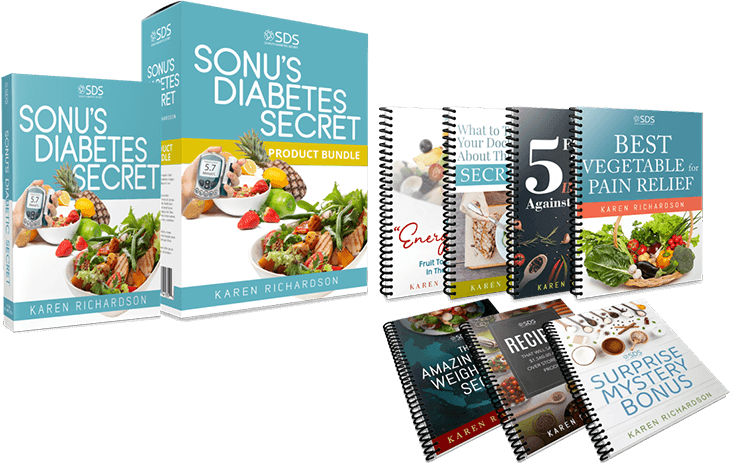
Get the complete Sonu's Diabetes Secret program — 3 core guides, 7 free bonuses, instant digital access — for a one-time $37, backed by a 365-day money-back guarantee.
GET INSTANT ACCESS NOW →